Military Intelligence
Ministry of Defence of the Slovak Republic
Summer holidays are for many young people, including children, a time of freedom. Mornings without the school bell, longer evenings, more rest. But the free regime can also mean more hours spent in front of the screen. The online space has been no longer just a place for games, videos and conversations with friends. Manipulative content, hate speech and attempts to reach young people by radical or extremist groups are increasingly appearing there. Since young people have simplified access to such online material, the potential for their self-radicalization is also increasing. And this phenomenon is, unfortunately, not unique in Slovakia as well.
Negative trends are also the decreasing age of adherents of extremist and radical groups, as well as a significant shift from the unaddressed dissemination of their ideas to actively establishing contact with potential young adepts. This change significantly facilitates the possible radicalization of individuals. Today's situation creates a space in which recruitment no longer has to take place exclusively in the physical world, but increasingly also through social networks, discussion platforms and popular online games.
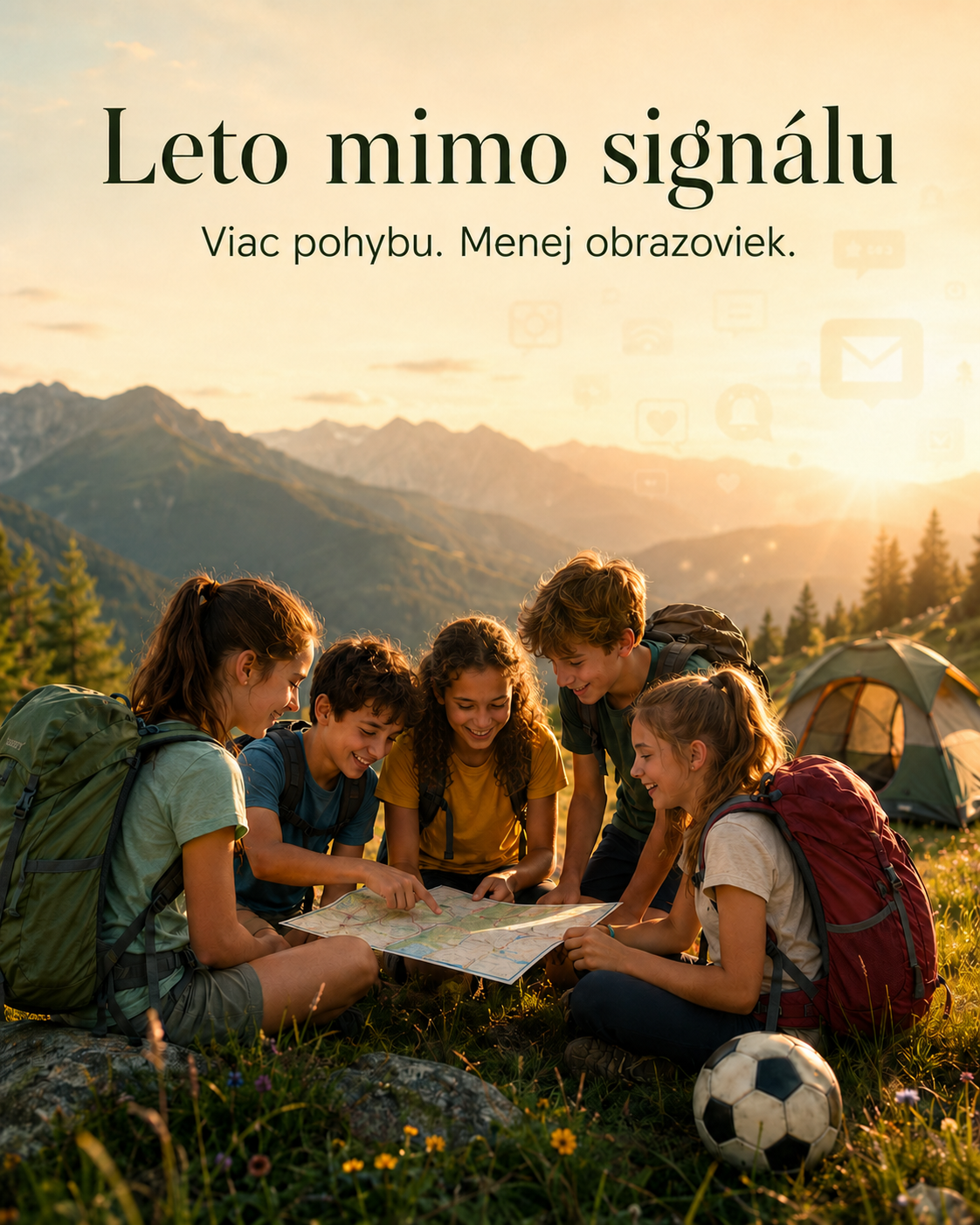
That is why it is important to talk about prevention in a different way than just through prohibitions. Children and adolescents need a safe space where they can experience acceptance, movement, cooperation and healthy adventure. Real-world experience helps them build self-confidence, psychological resilience and the ability to distinguish who and what to trust. Sports, hiking, camps, team tasks or an ordinary day outside without a mobile phone can be an effective step towards protecting a young person from becoming an easy target for manipulation.
From the perspective of Military Intelligence, the safety of young people is also a topic that does not begin with the threat itself, but with prevention. A strong society grows from children who know how to cooperate, think, trust the right authorities and spend time actively even outside the online space. A summer without a signal can be more than just a break — it can be a training in resilience, responsibility, a secure future, and the creation of new positive habits.